


 BUDGETS
 ACCESS TO YOUR TESTS
 MY RESULTS
 PROFESSIONAL ACCESS
Intestinal Dysbiosis
Intestinal Dysbiosis is an imbalance of the microbiota in our intestine, which can present symptoms such as abdominal pain, diarrhea, constipation, gas, heartburn, reflux, among many others.
The Intestinal Dysbiosis Test is the most comprehensive study to evaluate the functional state of the digestive system, from a stool sample, using NGS, RT-PCR, GC-FID, ICP-MS/MS, LC-MS/MS, and EIA techniques.
The study consists of the typing of the Microbiome and its metabolic activity, together with the assessment of inflammatory, infectious, permeability, toxicity, and neurobiology markers.
INDICATED FOR:
- Study of Microbiome functionality
- Study, treatment, and monitoring of digestive pathologies such as Inflammatory Bowel Diseases (Ulcerative Colitis and Crohn’s Disease), Irritable Bowel Syndrome, SIBO, etc.
- Chronic conditions of diarrhea, constipation, heartburn, reflux, gas, and poor digestion.
- Skin alterations such as dermatitis, eczema, psoriasis, etc.
- Evaluate food sensitivity and intestinal parasites.
- Evaluate the presence or absence of viruses related to intestinal pathologies.
- Relate the distribution of the microbiota with neurological disorders such as anxiety, stress, depression, ASD, etc.
- Evaluate biliary function and its biotransformation.
- Assess the degree of exposure/toxicity to metals and minerals.
What Does the Intestinal Dysbiosis Test Study?
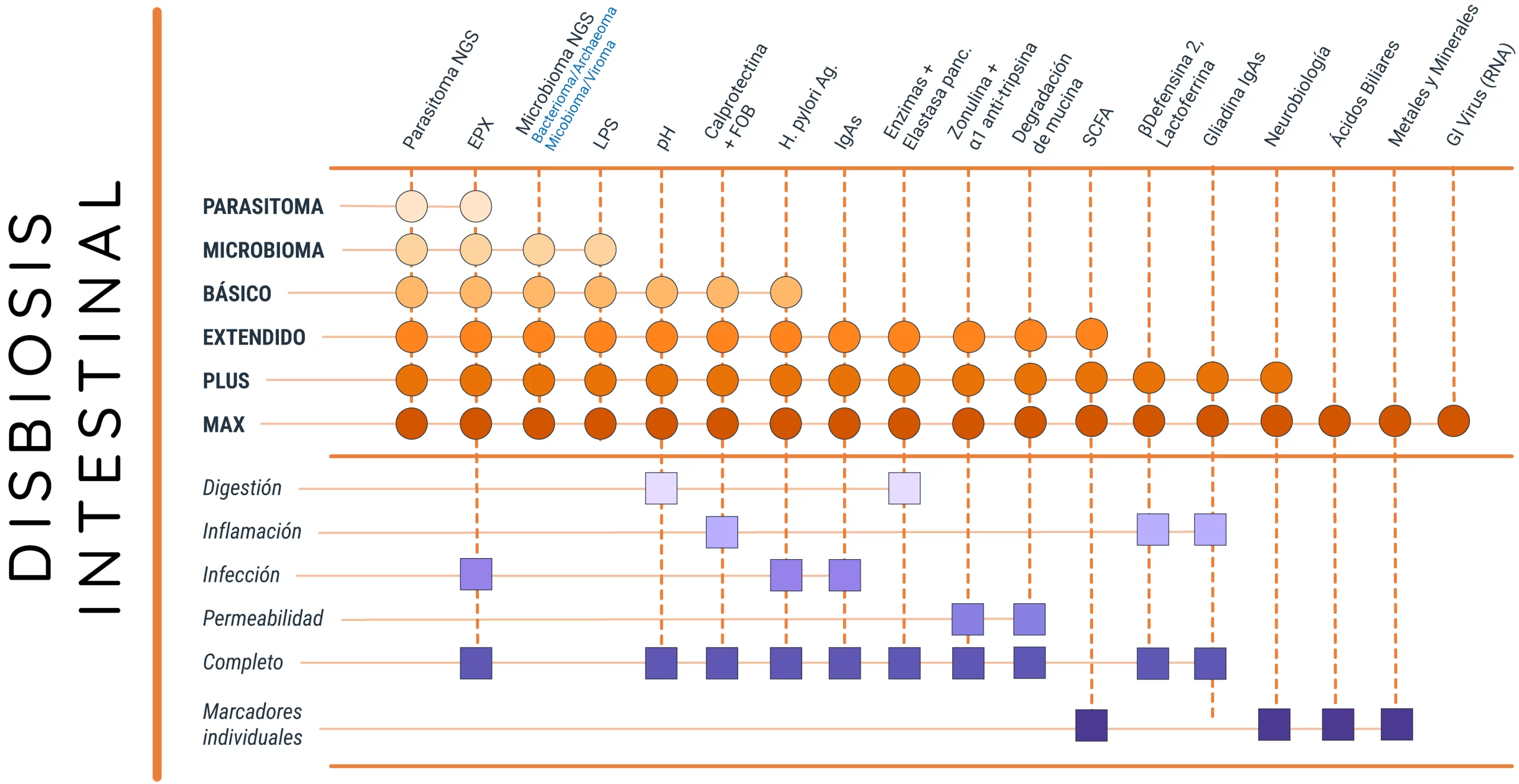
PARASITOMA by NGS (>20 genera)*: Blastocystis, Acanthamoeba, Entamoeba, Giardia, Spinonucleus, Monocercomonoides, Cyclospora, Cystoisospora, Cryptosporidium, Eimeria, Neospora, Anncaliia, Enterospora, Hepatospora, Mitosporidium, Enterocytozoon, Enterobius, Ascaris, Strongyloides, Trichuris, Necator, Ancylostoma, Anisakis, Hymenolepis, Taenia, and Fasciola. (*The most abundant species are identified).
MICROBIOME by NGS:
– BACTERIOMA (>100 genera) + Bacillota/Bacteroidota Ratio, Bacteroides/Prevotella Ratio, Muconutritive/Regulatory/Proteolytic Microbiota. Species are included according to abundance. Includes the typing of Escherichia coli subspecies.
– ARCHAEOMA (>50 genera) + Methanogenic/Sulfurous/Halophilic/Thermophilic/Nitrophilic/Mixed Archaeas. Species are included according to abundance.
– MYCOBIOME (>50 genera) + Fungi/Yeasts/Other species. Species are included according to abundance.
– VIROME (>40 genera of bacteriophages and >10 families of viral pathogens) + VMR Ratio (virus vs microorganisms). The STX phage is identified.
– LPS and its composition (lipid A, O antigen, and post-synthesis modifications).
SCFA: Total SCFAs, Beneficial SCFAs (Butyric, Acetic, and Propionic), Putrefactive SCFAs (Caproic, Valeric, iso-Butyric, iso-Capric, iso-Valeric), Protein SCFAs.
NEUROBIOLOGY: Glycine, Alanine, Beta-Alanine, Histidine, Histamine, Glutamine, Glutamate, GABA, Tyrosine, Phenylalanine, Dopamine, Tryptophan, Serotonin, Imidazole Propionate (ImP), TMAO (Trimethylamine Oxide), Taurine, Ethanolamine (EA), and Phosphoethanolamine,
Pyroglutamic acid (5-oxoproline)
BILE ACIDS: Cholic Acid, Deoxycholic Acid, Chenodeoxycholic Acid, Ursodeoxycholic Acid, Lithocholic Acid, Taurocholic Acid, Glycocholic Acid, Hyocholic Acid
INTESTINAL MARKERS:
– DIGESTION: pH, alpha glucosidase, beta glucosidase, beta glucuronidase, pancreatic elastase.
– INFLAMMATION: FOB, Calprotectin, Lactoferrin, b-defensin 2, Gliadin IgAs
– INFECTION: IgAs, EPX, Helicobacter pylori Ag.
– PERMEABILITY: Zonulin, alpha 1 anti-trypsin, and Mucin Degradation.
METALS and MINERALS:
– NUTRITIONAL: Na, K, Ca, Sr, B, P, Mg, Fe, Cu, Zn, S, Se, Co, Mn, Mo, I, V, Cr, Ge
– INDICATORS: Li, Al, Sn, Sb, Pt, Ni, Ba, Be, Gd, Ti, Bi, W
– TOXIC: As, Cd, Hg, Tl, Pb, U.
GI VIRUS: Astrovirus, Norovirus GI, Norovirus GII, Rotavirus, Sapovirus.
RESULTS DELIVERY: 7-20 DAYS (VARIES ACCORDING TO PROFILE)
Intestinal Dysbiosis by NGS. BASIC
Intestinal Dysbiosis by NGS. BASIC
252,00 €Intestinal Dysbiosis by NGS. EXTENDED
Intestinal Dysbiosis by NGS. MAX
Intestinal Dysbiosis by NGS. MAX
594,83 €- We provide customized quotes. Contact us at laboratory@teletest.es
- You can download or view your reports in the ‘Results’ section
- If you have any questions, please see our ‘Frequently Asked Questions’ section